Description
CBD vs THC Vape Oils – What’s Actually in the Cartridge?
Why This Distinction Matters
Vape cartridges have become one of the most popular ways to consume cannabinoids, and the UK market has responded with a huge range of products. But walk into any shop or scroll through any online listing and you’ll see the same words used loosely: “cannabis oil,” “THC vape,” “full spectrum,” “CBD cart.” These terms describe very different products with very different legal and pharmacological profiles.
This article breaks down what’s actually in a vape cartridge, how CBD and THC oils differ, and what to look for on a label.
What Is a Vape Oil?
A vape oil — also called e-liquid, cartridge oil, or distillate — is a cannabinoid-containing liquid designed to be heated by a coil and inhaled as vapour. The base is typically a carrier such as propylene glycol (PG), vegetable glycerine (VG), MCT oil, or a terpene blend. Into that base goes the active ingredient: CBD, THC, or a combination.
The carrier matters. PG and VG produce larger visible clouds and are the standard in nicotine vaping. MCT oil is smoother but has been associated with lung irritation when heated. Terpene-only formulations are increasingly popular because they avoid both issues and add flavour.
CBD Vape Oils
What They Are
CBD vape oils contain cannabidiol, the non-intoxicating cannabinoid found in hemp. In the UK, legitimate CBD vape products are manufactured from industrial hemp and contain only trace amounts of THC — typically below 0.2%, and often far lower in the finished product.
Full-Spectrum vs Broad-Spectrum vs Isolate
Three categories dominate the market:
Full-spectrum — contains the full range of cannabinoids and terpenes from the plant, including trace THC. The theory is that these compounds work together, an idea known as the entourage effect.
Broad-spectrum — contains multiple cannabinoids and terpenes, but THC has been removed entirely.
Isolate — pure CBD only, with no other plant compounds. Flavourless and odourless unless terpenes are added back.
If you want zero THC, broad-spectrum or isolate is the choice. If you want the full plant profile, full-spectrum is the choice.
What to Look For on the Label
Cannabinoid content in milligrams per cartridge, not just percentages
A batch number and a Certificate of Analysis (COA) from a third-party lab
Carrier ingredients listed
Whether terpenes are cannabis-derived or botanical
THC Vape Oils
What They Are
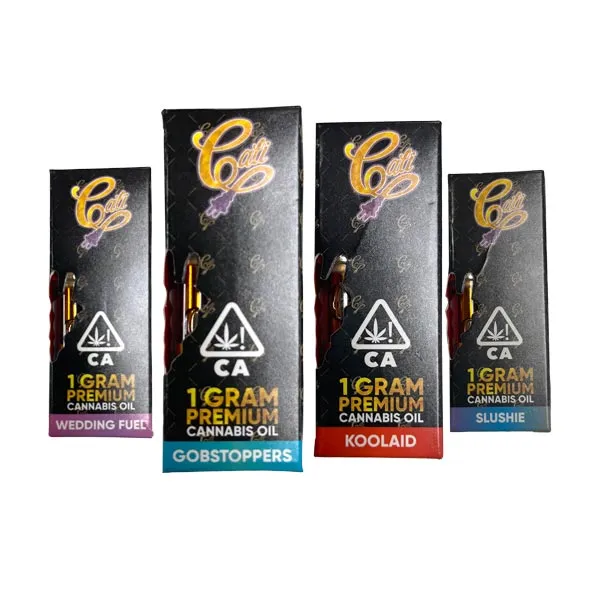
THC vape oils contain tetrahydrocannabinol, the primary intoxicating cannabinoid in cannabis. In the UK, THC is a controlled substance and is not available as a retail vape product. Legitimate THC-containing cartridges exist only as prescription medicines dispensed through licensed pharmacies.
The Unregulated Market
Because legitimate THC vapes aren’t sold at retail, an unregulated market has filled the gap. Public health bodies have repeatedly warned that products sold as “THC vapes” frequently do not contain THC at all. Testing has found synthetic cannabinoids — compounds like those in Spice — in a significant proportion of samples.
Synthetic cannabinoids are structurally unrelated to THC and act far more potently at the same receptors. They have been linked to severe adverse events including psychosis, seizures, and cardiac events. The danger isn’t only that the product may be stronger than expected; it’s that it may be an entirely different chemical.
Why the Distinction Is Hard to See
A cartridge is a sealed unit. You cannot see what’s inside, and street packaging is easily counterfeited. Labelling claiming “90% THC” or “premium distillate” is not evidence of anything. Without a batch number and a verifiable COA, there is no way to know what a cartridge contains.
Reviews
There are no reviews yet.